Anthropic dropped Claude Opus 4.8 on Wednesday, just 41 days after Opus 4.7, delivering a 5-point jump in agentic coding (64.3% to 69.2%) and a major leap in knowledge work scores. The release introduces "dynamic workflows" that let Claude orchestrate multiple subagents simultaneously, plus a user-facing effort dial and a fast mode running 2.5x speed at one-third the previous cost. Mythos-class capabilities are teased as arriving "in the coming weeks."
Dell Technologies posted a jaw-dropping Q1 with revenue up 88% to $43.8 billion, driven by $16.1 billion in AI server sales — a 757% year-over-year surge. The company raised full-year guidance to $167 billion (versus Wall Street's $142B consensus), with an AI server backlog of $51.3 billion. Shares are now up 234% in 2026.
Anthropic's Project Glasswing, using Claude Mythos Preview, identified over 10,000 high- or critical-severity vulnerabilities across 1,000+ open-source projects in roughly 30 days, including a 27-year-old OpenBSD bug and a CVSS 9.1 WolfSSL flaw. IBM Research joined as a constellation partner, integrating its Concert vulnerability management platform, bringing the total to about 50 organizations. Cloudflare separately reported discovering 2,000 bugs (400 critical) through the program.
OpenAI filed a confidential S-1 with the SEC on May 22, targeting a September listing at a valuation between $852 billion and $1 trillion. Goldman Sachs and Morgan Stanley are leading the deal. The filing came two days after a jury dismissed Elon Musk's lawsuit, clearing the biggest legal obstacle. Revenue is running at $2 billion per month, though the company still loses $1.22 for every dollar earned.
Anthropic is closing its second $30 billion raise of 2026 at a valuation above $900 billion, which would make it the world's most valuable AI startup. Sequoia, Dragoneer, Altimeter, and Greenoaks are co-leading with roughly $2 billion each. The company's annualized run rate rocketed from $14 billion in February to $30 billion in April, and it expects to report $10.9 billion in Q2 revenue — potentially its first profitable quarter.
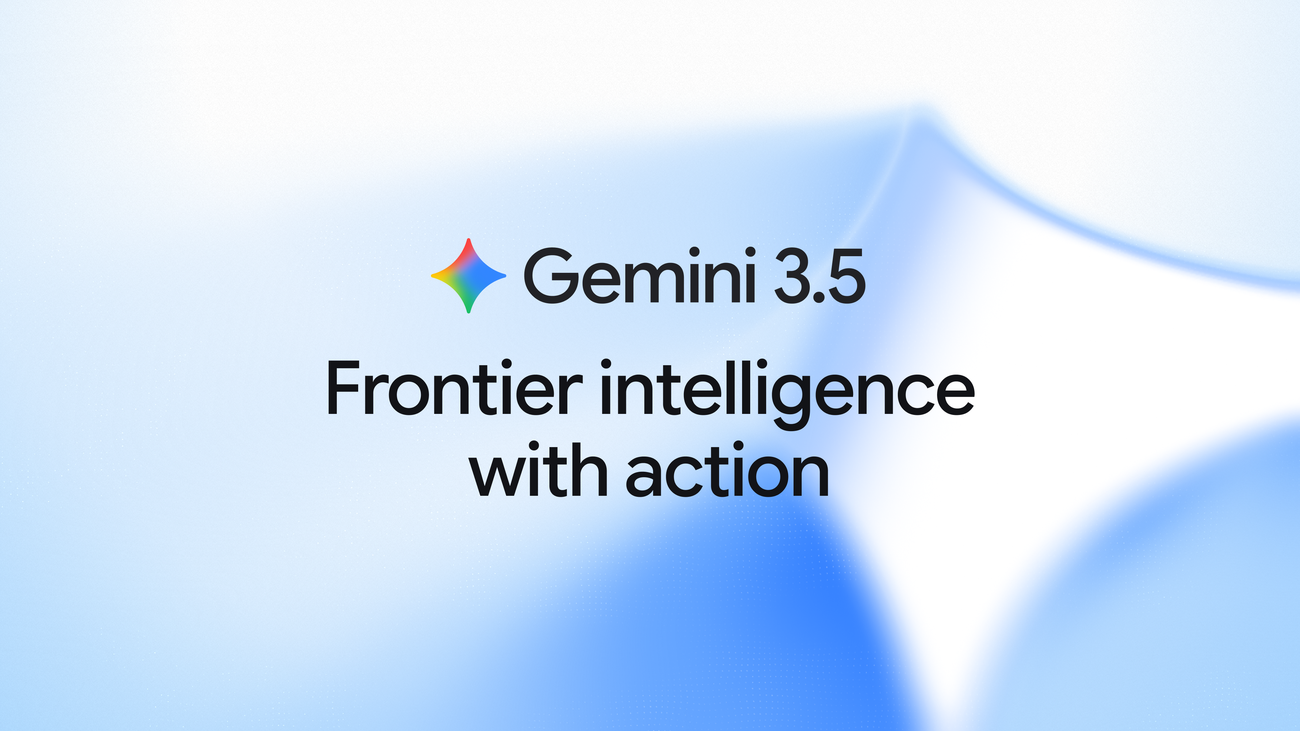
Google officially retired its traditional search box in favor of a conversational Gemini-powered interface, with Gemini 3.5 Flash now the default model behind both the Gemini app and Google Search's AI Mode globally. The model outperforms last year's Gemini 3.1 Pro on key benchmarks at 4x the speed, with pricing at $1.50/$9 per million tokens and a 1M context window. Google positioned Flash as fast and cheap rather than competing head-to-head with Anthropic's Mythos.
Google DeepMind, Anthropic, Meta, and Mistral each completed acquisitions within a five-day span, signaling a new consolidation phase in frontier AI. DeepMind absorbed Contextual AI's team through an $80-90 million licensing structure designed to dodge antitrust scrutiny, while Meta acqui-hired the Dreamer team. The deals are structured as talent acquisitions and technology licenses rather than traditional M&A, suggesting labs are pre-adapting to anticipated regulatory friction.
Micron Technology crossed the $1 trillion market cap threshold on May 26 after a 19% single-day surge, capping a nearly 10x increase from $108 billion a year ago. UBS tripled its price target to $1,625 per share. All three major memory chipmakers — Samsung, Micron, and SK Hynix — now exceed $1 trillion individually, with a combined valuation approaching $3 trillion. Micron's entire 2026 high-bandwidth memory production is already sold out.
Nearly all of California's 30 remaining AI-related bills were approved by their chamber of origin ahead of Friday's crossover deadline, advancing the largest batch of state-level AI regulation in U.S. history to the second legislative house. The action intensifies over the next four weeks before the July 2 summer adjournment. Any bill that missed the May 29 cutoff is effectively dead for the session.
NextEra Energy's $67 billion all-stock acquisition of Dominion Energy creates the world's largest regulated utility with 110 gigawatts of generation capacity, explicitly positioned to serve AI data center demand. Dominion's territory includes Northern Virginia, the most data-center-dense region on the planet. The combined construction backlog of 130 gigawatts exceeds their existing generation capacity.