Anthropic is closing a funding round topping $30 billion at a valuation above $900 billion as soon as this week, according to Bloomberg. Co-led by Sequoia, Dragoneer, Altimeter, and Greenoaks, the deal would vault Anthropic past OpenAI's $852 billion March valuation to become the world's most valuable AI startup. The company also projects $10.9 billion in Q2 revenue and its first quarterly operating profit.
Pope Leo XIV today publishes "Magnifica Humanitas," his first encyclical, focused on "the protection of the human person in the age of artificial intelligence." The document, co-presented at the Vatican with Anthropic co-founder and interpretability researcher Christopher Olah, condemns lethal autonomous weapons, warns against AI-generated deepfakes, and calls for robust regulation. Signed on the 135th anniversary of Leo XIII's worker-rights encyclical Rerum Novarum, the Vatican frames AI as an anthropological challenge, not merely a technological one.
OpenAI filed its confidential S-1 registration statement with the SEC on May 22, officially beginning its path to a public listing targeted for Q4 2026. Goldman Sachs and Morgan Stanley are leading the deal, with a valuation target between $852 billion and $1 trillion. This would be the largest AI IPO in history.
Andrej Karpathy, OpenAI co-founder and former Tesla Autopilot lead, announced he has joined Anthropic to work on pre-training under team lead Nick Joseph. Karpathy will build a team focused on using Claude to accelerate pre-training research. The hire is a major talent coup for Anthropic and signals shifting gravity in the AI talent wars.
The Department of Defense finalized classified-network AI agreements with OpenAI, Google, Microsoft, AWS, Nvidia, SpaceX, Oracle, and Reflection AI, replacing its $200 million Anthropic contract. Defense Secretary Hegseth labeled Anthropic a supply-chain risk after the company refused to remove safety restrictions preventing use in mass surveillance and lethal autonomous weapons. Claude will no longer run on Secret or Top Secret networks.
OpenAI shipped a "Locked Use" feature for Codex on May 21, allowing it to operate Mac apps even after the screen locks and display goes dark. Users can trigger tasks remotely from their phone via Codex Mobile. The feature uses an Apple authorization plug-in with temporal and behavioral safeguards, marking a significant step toward truly autonomous background agents.
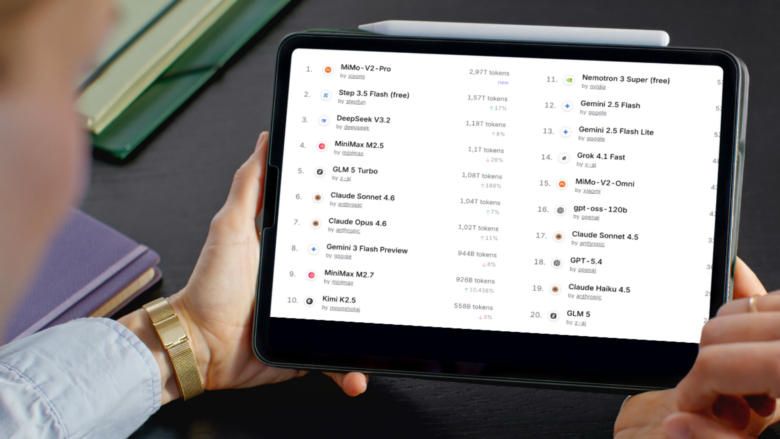
Chinese AI providers now command over 45% of OpenRouter weekly token volume, up from under 2% a year ago. Kimi K2.6 became the first open-weight model to beat GPT-5.4 on SWE-Bench Pro, while DeepSeek V4 launched with aggressive promotional pricing. The driver is economics: Chinese models run 10-20x cheaper than American alternatives, and developers are voting with their wallets.
NextEra Energy announced a $67 billion acquisition of Dominion Energy, creating the world's largest regulated electric utility with a $249 billion market cap. Dominion powers northern Virginia's data center corridor and has 51 GW of contracted data center capacity. NextEra plans to build 30+ data center hubs as AI-driven electricity demand is projected to reach 15-25% of U.S. consumption by 2030.
Intuit laid off approximately 3,000 employees, 17% of its global workforce, while simultaneously signing multi-year AI partnerships with Anthropic and OpenAI. CEO Sasan Goodarzi denied the cuts were AI-driven, but the restructuring eliminated "coordination-heavy roles" and management layers. Tech layoffs in 2026 have already topped 100,000, with Meta, Salesforce, and Google also restructuring.
Google announced sweeping changes to Search at I/O 2026, introducing custom AI-generated visuals, interactive graphics, and mini-apps directly in search results. The company said users are now asking "much longer and harder questions" and that the era of 10 blue links is "functionally over." The changes represent Google's most aggressive bet yet on AI-first search.