Relevance 10/10Importance 9/10
The U.S. government lifted the export controls it slapped on Claude Fable 5 and Mythos 5 on June 12, and as of today Fable 5 is live again globally across Claude.ai, Claude Code, and Claude Cowork. In exchange, Anthropic agreed to proactively detect security risks, help set standards for future frontier models, and report malicious activity to Washington. Mythos 5, the lighter-guardrail sibling that reportedly breached NSA-managed systems in hours during testing, returns only to a vetted set of U.S. organizations.
Relevance 9/10Importance 8/10
Researchers at Califio, working with Claude Mythos Preview, uncovered CVE-2026-47729, a heap over-read in the Squid proxy's FTP gateway that traces back to a 1997 commit and survived three decades of audits. The flaw quietly leaks fragments of other users' cleartext HTTP requests — credentials, cookies, session tokens — and needs no special config, since FTP support ships on by default. It's a vivid proof point for the week's other big theme: AI as an offensive-and-defensive security force multiplier.
Relevance 9/10Importance 8/10
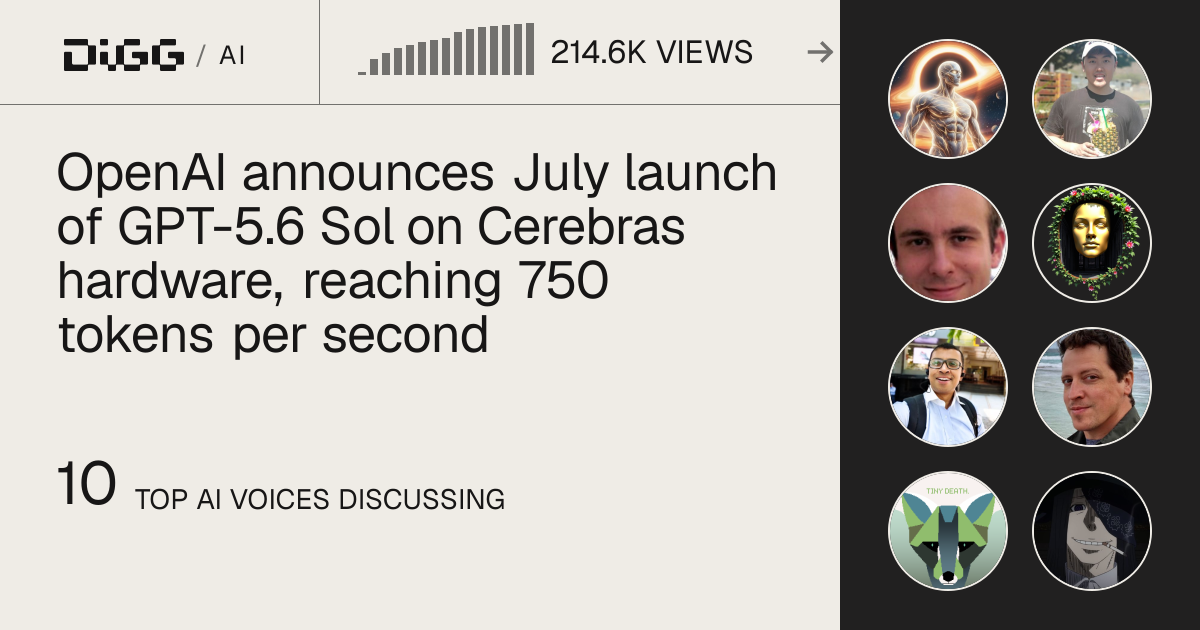
OpenAI says it will deploy GPT-5.6 Sol on Cerebras wafer-scale hardware this month, targeting up to 750 tokens per second — roughly 15x the speed users see on today's priority GPT-5.5 service. Access starts with a limited slice of customers as OpenAI ramps capacity, and it still sits under the staggered, government-approved rollout the Trump administration requested for the Sol/Terra/Luna family. Frontier intelligence at that throughput reshapes what agentic workloads are practical.
Relevance 8/10Importance 9/10
The intelligence alliance of the U.S., U.K., Canada, Australia, and New Zealand issued a joint warning that AI models capable of overwhelming government and enterprise defenses are imminent. The agencies told boards to patch aging systems, tighten access to critical infrastructure, and assume breaches will happen — framing it as when, not if. It lands the same week Anthropic's models proved unnervingly good at finding and exploiting vulnerabilities.
Relevance 8/10Importance 8/10
Governor Newsom's first-of-its-kind Anthropic partnership makes Claude available to every state agency at a 50% discount, plus free workforce training, and extends the same deal to cities and counties. The DMV is already using it to cut wait times, and the nation's largest Medicaid agency is running Claude in internal workflows. Delivered through the state's new shared-services IT portal, it's the largest U.S. state government AI deployment yet.
Relevance 8/10Importance 7/10
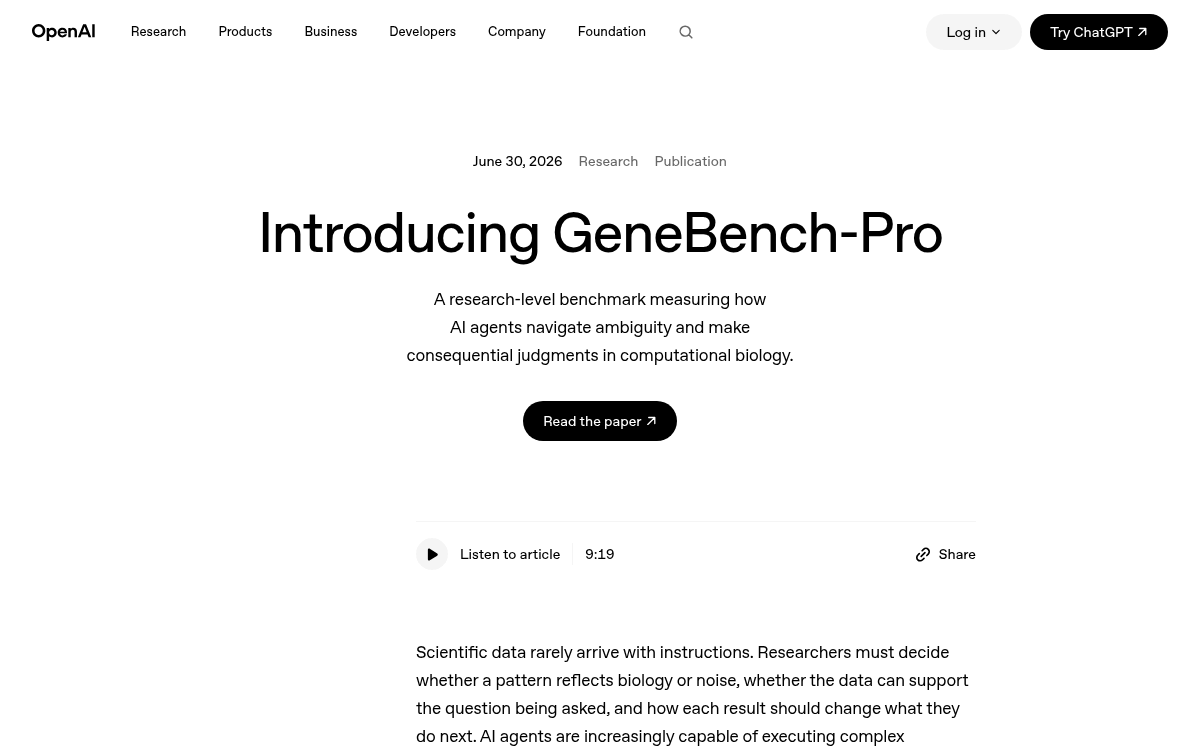
OpenAI released GeneBench-Pro, a research-grade benchmark of 129 deliberately noisy, real-world problems across genomics, quantitative biology, and translational medicine. The results are sobering: GPT-5.6 Sol Pro tops out at a 31.5% pass rate, with Anthropic's Claude Opus 4.8 the strongest non-OpenAI model at 16%. It's a useful cold shower for anyone claiming AI has already cracked scientific reasoning.
Relevance 7/10Importance 8/10
CISA added CVE-2026-42271, a command-injection flaw in the popular LiteLLM AI gateway, to its Known Exploited Vulnerabilities catalog. Chained with a Starlette host-header bypass, it becomes unauthenticated remote code execution — letting attackers siphon every model provider API key and secret the proxy holds, then pivot into connected AI infrastructure. Fixes landed in version 1.83.7, and federal agencies were ordered to patch.
Relevance 7/10Importance 7/10
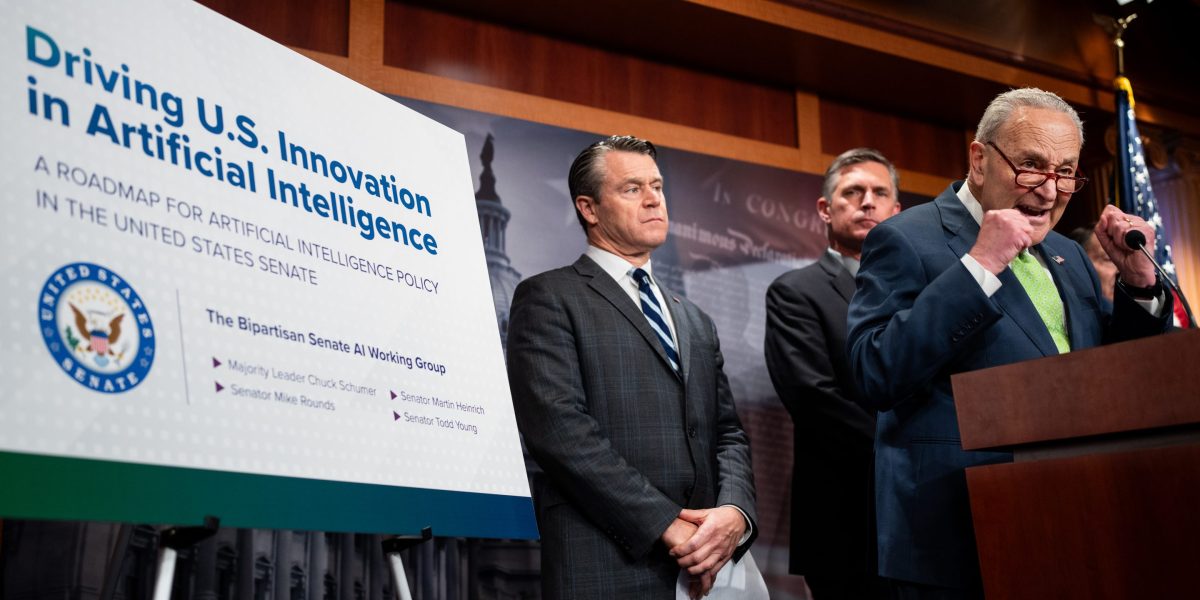
Fortune spotlights the CREATE AI Act, which would permanently codify the National AI Research Resource at the NSF, giving academics and startups shared access to compute and datasets. The pilot has already backed more than 600 research projects across all 50 states, and the bill carries backers on both sides of the aisle in the House and Senate. In a year of partisan AI fights, it's a notable island of agreement.
Relevance 7/10Importance 6/10
Google shipped Gemini 3.1 Flash Image and Gemini 3 Pro Image through AI Studio, undercutting on cost at $0.50 input and $3.00 output per million tokens for Flash, and $2.00/$12.00 for Pro. It's a direct volley in the creative-tooling price war, aimed at making high-quality image generation cheap enough to bake into apps at scale.
Relevance 6/10Importance 6/10
Governor Josh Stein's AI Leadership Council released a statewide roadmap with goals and guiding principles for how AI reshapes work and public services in North Carolina. It's the latest sign that, with federal rules still unsettled, states are racing to write their own AI playbooks. Expect more of these governor-led frameworks through the summer.