With the 60-day ceasefire window now expired and no deal on the table, President Trump confirmed his administration has opened a direct backchannel to Iran's Islamic Revolutionary Guard Corps — while publicly insisting Tehran raise a "white flag of surrender." He's also floated declaring the Strait of Hormuz effectively under US control, and says preventing an Iranian nuclear weapon remains goal number one. Oil markets are already reacting, with WTI up 2.6% to $84.50 a barrel.
The White House is leaning hard into prescription drug pricing ahead of November's midterms, after CPI data showed pharmaceutical prices fell 0.8% in July and are down 3.1% year-over-year. That's the sharpest annual decline in more than six decades, which the administration attributes to its most-favored-nation pricing push. Democrats dispute the causation, but the number itself isn't in dispute.
Agriculture Secretary Brooke Rollins announced Tuesday that the Forest Service has filed a proposed rule rescinding the 2001 Roadless Area Conservation Rule, opening nearly 45 million acres of national forest to logging and road building. The administration calls the existing rule a "one-size-fits-all restriction" that has hamstrung wildfire risk-reduction work. Expect litigation — and expect it fast.
Attorney General Todd Blanche has launched a firearms restoration process letting certain individuals under federal firearms disabilities apply to regain their Second Amendment rights. The mechanism has technically existed in statute for decades but sat unfunded and dormant since the early 1990s. Gun rights groups are calling it the most consequential DOJ action on the issue in a generation.
Russian depositors are yanking billions out of the country's banking system as Ukrainian drone strikes, a widening budget deficit, and fears the Kremlin will seize private assets converge on Moscow's war economy. It's the clearest signal yet that domestic confidence in Russia's financial stability is cracking. Analysts say the outflows are accelerating faster than at any point since the war began.
The president has directed the Pentagon to substantially scale back joint military exercises with South Korea, citing cost and the signal the drills send to Kim Jong Un. The timing is notable — North Korea has been ramping up missile tests in recent weeks. Defense hawks in both Seoul and Washington are openly uneasy.
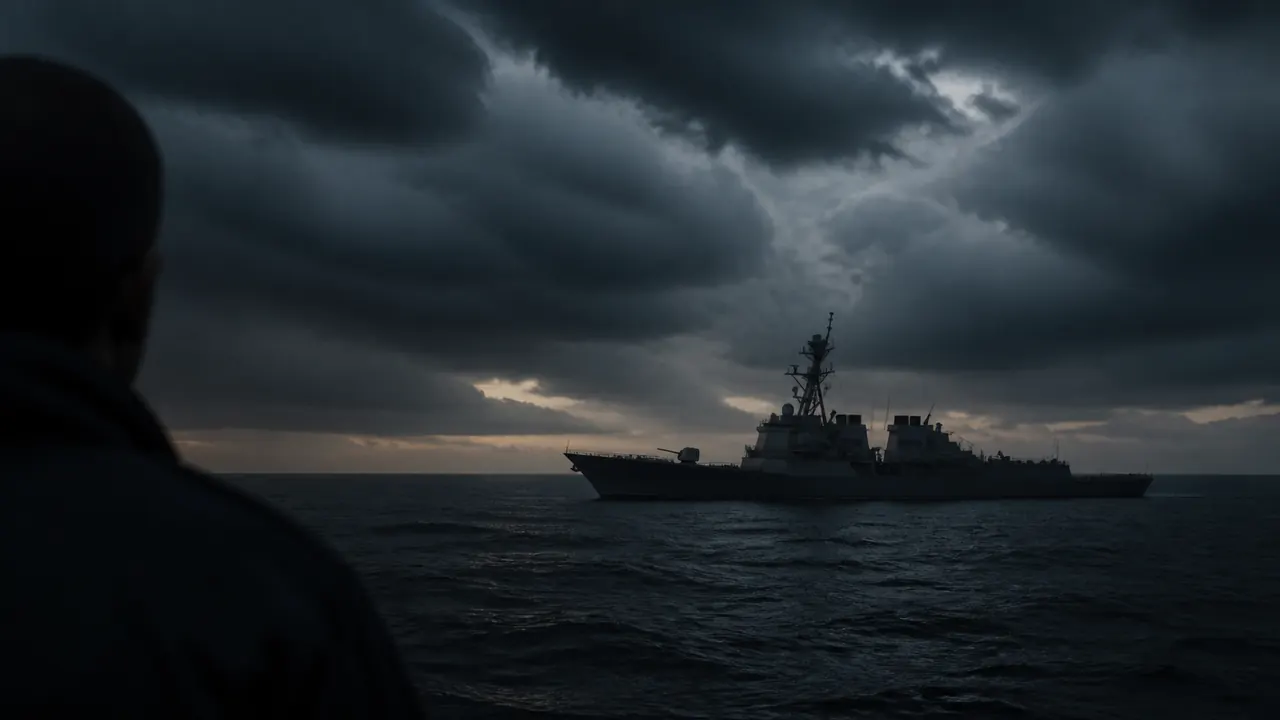
The USS Benfold suffered a generator failure that left the destroyer without power for four days in contested South China Sea waters, ultimately requiring a tow to Subic Bay. The incident has exposed serious readiness and maintenance gaps in the Seventh Fleet at precisely the wrong geography. Lawmakers are demanding answers about how a frontline warship went dark that long.
Three next-generation microreactors hit criticality this summer — Antares Nuclear's Mark-0 at Idaho National Lab, Valar Atomics' helium-cooled Ward 250 in Utah, and Deployable Energy's Unity, whose core fits in a twenty-foot shipping container and rode to Idaho in the bed of a Ford F-150. Mark-0 is the first non-light-water reactor licensed in the United States since 1973. Data center demand is the money behind the revival.
Disney has filed suit against the Federal Communications Commission, seeking to block early broadcast license renewal proceedings targeting its ABC stations. The company alleges the FCC is running a retaliatory campaign tied to the network's news coverage. It's a genuine First Amendment collision between a media giant and a federal regulator, and the outcome could reshape broadcast licensing law.
Restaurants on Martha's Vineyard are overhauling their menus as alpha-gal syndrome — a tick-borne condition that makes people allergic to red meat — spreads across the island. There have been 416 positive alpha-gal tests recorded on the Vineyard as of June 2026. Chefs are now fielding questions about whether the butter touched beef tallow.