Relevance 10/10Importance 9/10
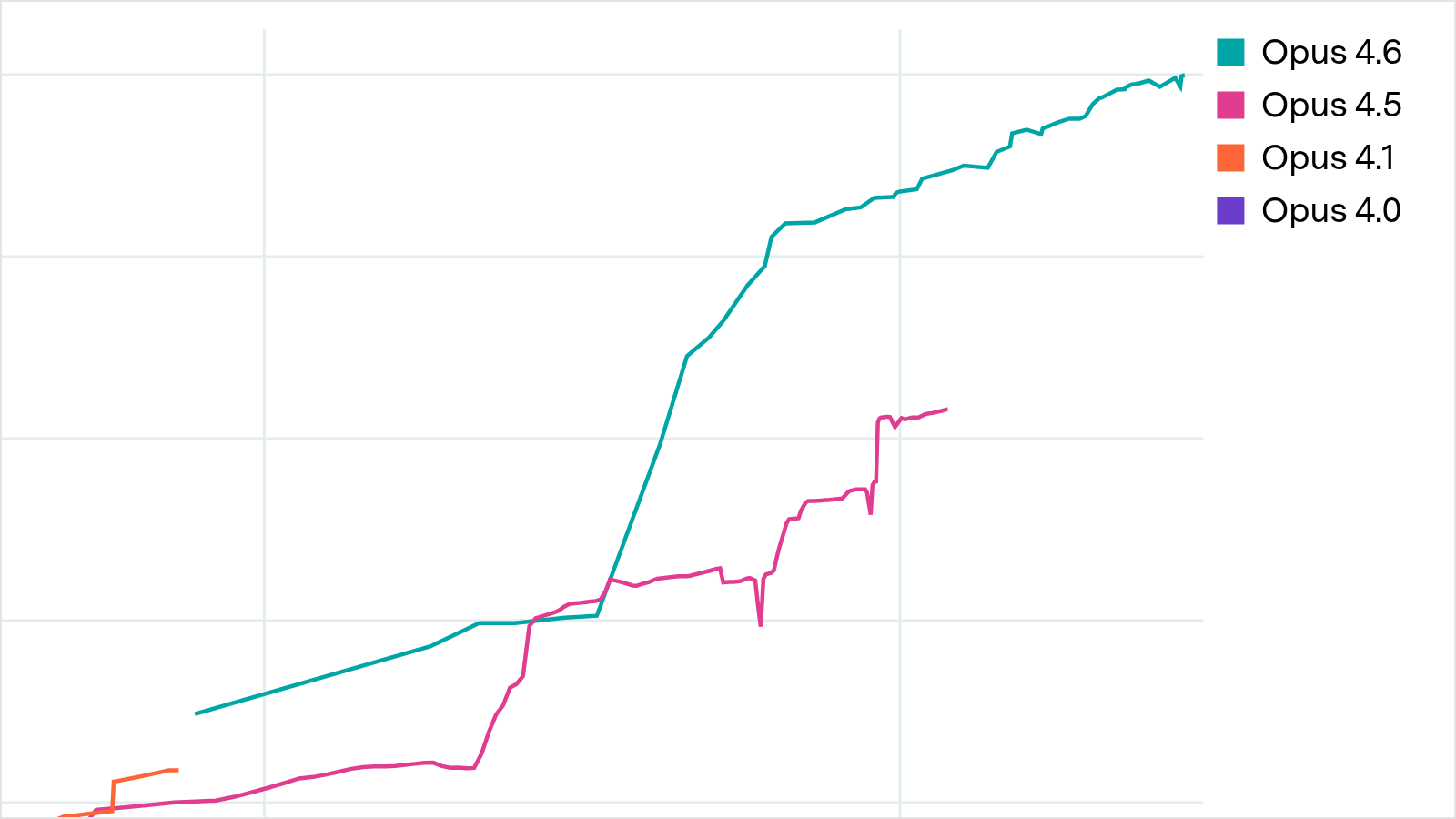
Epoch AI, working with METR, dropped MirrorCode, which hands a model a compiled binary it can't read plus a test suite and asks it to reconstruct the entire program from scratch. Claude Opus 4.7 led at a 56 percent solve rate, including reimplementing a roughly 60,000-line configuration language autonomously, with GPT-5.5 at 44 percent and Gemini 3.1 Pro at 32 percent. One task ran nonstop for 19 days at a $2,600 compute bill, the longest single autonomous coding run ever publicly documented.
Relevance 9/10Importance 9/10
Four senior DeepMind researchers bolted to rivals inside a single week, including Transformer co-author Noam Shazeer to OpenAI and AlphaFold Nobel laureate John Jumper to Anthropic, with Jonas Adler and Alexander Pritzel also headed to Anthropic. Alphabet shed roughly $269 billion in market value, its worst day in over a year, as investors started pricing in human capital, not just margins. The departures raise fresh doubts about whether DeepMind can stay at the frontier.
Relevance 9/10Importance 9/10
OpenAI revealed Jalapeño, a reticle-sized ASIC built with Broadcom and architected specifically for LLM inference, taken from design to tape-out in just nine months. Early testing shows performance-per-watt well above current state of the art and cost savings around 50 percent versus typical AI GPUs. Initial deployment is targeted for the end of 2026, and OpenAI says its own models helped accelerate the chip's design.
Relevance 9/10Importance 8/10
Microsoft is yanking most internal Claude Code licenses and steering developers to GitHub Copilot CLI, hitting the team behind Windows, Microsoft 365, Outlook, Teams and Surface. The official framing is strategic consolidation, but sources point to runaway token costs landing right at the June 30 fiscal-year close. The irony: Claude Code got pulled partly because it was too popular, with devs preferring it over Microsoft's own tool.
Relevance 8/10Importance 8/10
Co-founder Jack Clark says Anthropic is hiring more deeply experienced people because "the returns on intuition are much greater than before," with Claude handling the scaling work juniors used to do. He flags weaker entry-level graduate hiring as the only proven labor effect of AI so far. His warning: when AI multiplies senior output while automating entry-level work, that paradox could ripple across the broader economy.
Relevance 8/10Importance 7/10
Two former xAI employees tell The Information that well over half of Grok's traffic is pornographic images, video, roleplay or erotica, a niche the company leaned into as rivals banned explicit generation. Grok's overall web traffic fell 22 percent from January to May, the steepest drop among major platforms tracked by Similarweb. SpaceX's IPO prospectus reportedly set aside $530 million for potential litigation tied to Grok's image generation.
Relevance 7/10Importance 7/10
onsemi agreed to acquire Synaptics in an all-stock deal valued around $7 billion, folding in Synaptics' edge-AI compute and human-machine interface portfolio. The combined company aims to push beyond power and sensing into intelligent edge systems for automotive, industrial and AI data centers. onsemi frames it as positioning itself at the center of "physical AI," with a claimed path to a $243 billion addressable market by 2030.
Relevance 8/10Importance 6/10
Researchers from Chalmers University and the Volvo Group argue agents widen software engineering rather than shrink it, introducing "semi-executable artifacts" like prompts, workflows, policies and escalation rules that shape system behavior much like code. The work, tied to a keynote at the Agentic Engineering 2026 workshop in Rio, draws on real automotive deployments. The pitch: the discipline grows to govern the messy, judgment-dependent layer agents now run on.